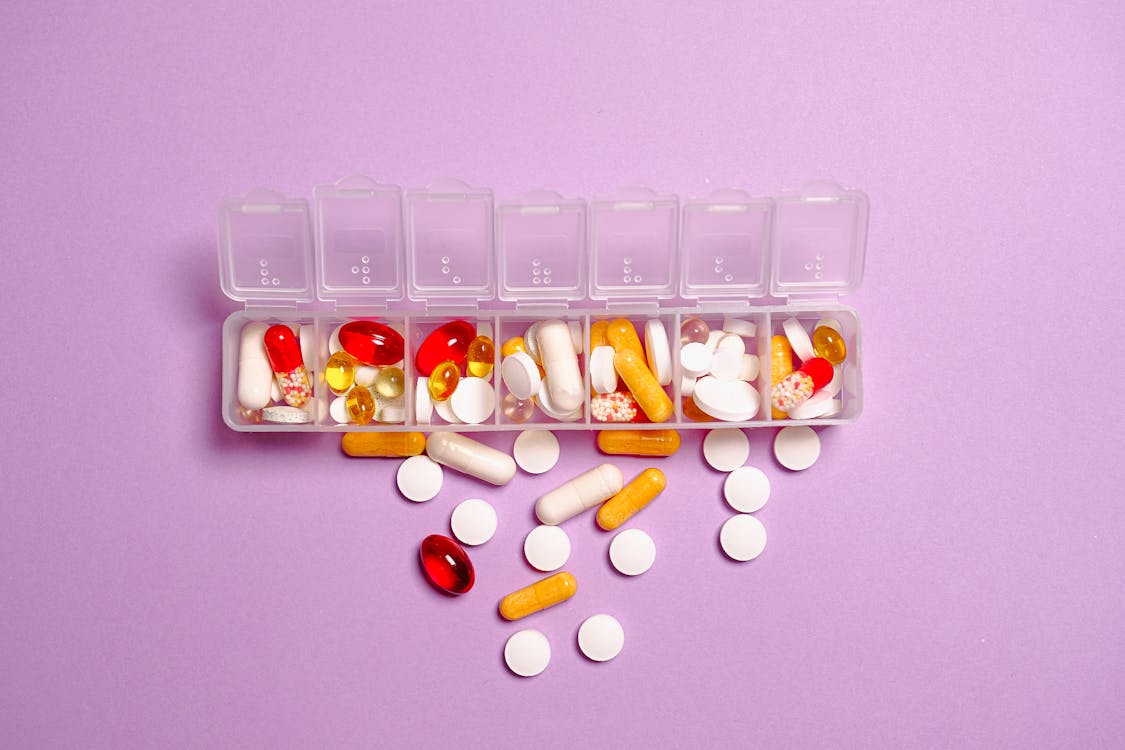

LSD and psilocybin sit in the same pharmacological family but produce different clinical experiences for reasons that matter when you are choosing a session. The Holze et al. (2022, Neuropsychopharmacology) double-blind crossover trial found LSD 100 micrograms and psilocybin 20 milligrams produced statistically indistinguishable subjective intensity on the 5D-ASC scale. That settles the intensity question. It does not settle the question of which session is right for which patient, which is a separate problem entirely.
The practical differences come down to four axes. Duration: LSD runs 8 to 12 hours of active experience, psilocybin runs 4 to 6 hours. Receptor profile: psilocin acts close to a full agonist at 5-HT2A, while LSD shows partial agonist behavior plus meaningful dopamine D2 activity. Evidence base: psilocybin has Phase 2 and Phase 3 data for treatment-resistant depression, while LSD trials are smaller and more scattered. Subjective character: clinical observers and trial participants frequently describe LSD as more cognitive and analytical, psilocybin as more emotional and body-centered. None of this is absolute, but the patterns are consistent enough to inform a choice.
This piece walks through the head-to-head data, the pharmacology behind the differences, the clinical-fit implications, and a framework for choosing between the two molecules in 2026. The legal status, the research depth, and the session logistics all push in different directions. The goal is to put the comparison on a clinical footing rather than a cultural one.
- LSD 100 micrograms and psilocybin 20 milligrams produce statistically equivalent subjective intensity in the only rigorous head-to-head crossover trial (Holze et al., 2022, Neuropsychopharmacology).
- Duration is the practical separator: LSD 8 to 12 hours versus psilocybin 4 to 6 hours, which determines whether a session fits a single clinic day.
- Psilocybin acts close to a full 5-HT2A agonist; LSD is a partial agonist with substantial receptor residence time and additional dopamine D2 activity.
- Psilocybin has the deeper Phase 2 and Phase 3 evidence base, anchored by Carhart-Harris (2016, Lancet Psychiatry) and Goodwin (2022, NEJM) for depression.
- LSD has rigorous but smaller trials: Gasser et al. (2014) for end-of-life anxiety and Haijen 2024 in JAMA Psychiatry for adult ADHD.
- Cross-tolerance at 5-HT2A means dosing LSD and psilocybin within a 7 to 14 day window blunts the second substance significantly.
The LSD vs Psilocybin Therapy Comparison Table
The cleanest way to read the comparison is feature by feature, because no single axis settles the choice. Holze et al. (2022) anchored the dose-equivalence finding at LSD 100 micrograms approximating psilocybin 20 milligrams, but the surrounding clinical context differs across at least six dimensions that matter for session planning. The table below summarizes the comparison points and the underlying evidence.
| Dimension | LSD | Psilocybin |
|---|---|---|
| Effective therapeutic dose | 100 to 200 micrograms (Gasser, 2014; Holze, 2022) | 20 to 25 milligrams (Carhart-Harris, 2016; Goodwin, 2022) |
| Active session duration | 8 to 12 hours | 4 to 6 hours |
| Receptor profile | Partial 5-HT2A agonist with extended residence; meaningful D2 activity | Psilocin acts closer to a full 5-HT2A agonist |
| Onset | 30 to 60 minutes | 20 to 40 minutes |
| Subjective character (frequently reported) | Analytical, cognitive, visual, durational | Emotional, somatic, introspective, time-bounded |
| Clinical evidence base | Smaller trials: Gasser 2014 anxiety; Haijen 2024 ADHD | Phase 2 and 3: Carhart-Harris 2016, Goodwin 2022 NEJM |
| Tolerance | Rapid; cross-tolerant with psilocybin within 7 to 14 days | Rapid; cross-tolerant with LSD within 7 to 14 days |
| Legal status (2026, most jurisdictions) | Schedule I in the United States; clinical-trial access only | Schedule I federally; expanded state-level and clinical access (Oregon, Colorado) |
The structural takeaway is that LSD and psilocybin are pharmacologically related but operationally different. The same patient could have meaningful sessions on either molecule. The question is whether the clinical infrastructure, the time available, and the specific therapeutic target favor one over the other. For most modern psychedelic-assisted protocols, psilocybin wins on session logistics. For specific indications where duration is a feature rather than a bug, LSD has a case.
Holze et al. (2022, Neuropsychopharmacology) ran a randomized double-blind four-period crossover trial with 28 healthy participants receiving LSD 100 micrograms, LSD 200 micrograms, psilocybin 15 milligrams, and psilocybin 30 milligrams. The 5D-ASC subjective intensity scores at LSD 100 and psilocybin 20 (interpolated from the dose-response curves) were statistically indistinguishable, establishing the dose-equivalence ratio that the field has cited ever since. Duration differed sharply, with LSD producing roughly twice the active session window of psilocybin at equivalent intensity. This is the cleanest controlled head-to-head data the literature currently offers.
What Did Holze 2022 Actually Show About Dose-Equivalence?
Holze and colleagues at the Liechti lab in Basel ran the first rigorous direct comparison between LSD and psilocybin in healthy volunteers. The crossover design with 28 participants tested four conditions: LSD 100 micrograms, LSD 200 micrograms, psilocybin 15 milligrams, and psilocybin 30 milligrams. The subjective intensity ratings on the 5-Dimensional Altered States of Consciousness scale produced clean dose-response curves for each substance, and the curves overlapped at LSD 100 micrograms and psilocybin 20 milligrams roughly speaking. That is the dose-equivalence finding the field now cites.
What the trial did not show is that the two experiences are subjectively identical at those doses. Intensity is one axis. Character, duration, and clinical effect are different axes. Participants in the Holze trial described both substances as producing comparable peak intensity, but the timeline of that intensity, the texture of the experience, and the post-session window differed meaningfully. The trial was not designed to capture qualitative experience differences, only the quantitative intensity benchmark.
The practical use of the Holze data is to settle two questions. First, "is LSD stronger than psilocybin?" The answer is dose-dependent, and at therapeutic doses they are roughly equivalent. Second, "how do I think about cross-dose comparisons across trials that used different substances?" The 100 micrograms LSD to 20 milligrams psilocybin ratio is now a reasonable benchmark for that comparison, with the standard caveats about individual variability.
How Do LSD and Psilocybin Differ Pharmacologically?
Both molecules act primarily at the 5-HT2A serotonin receptor, but they diverge in agonist behavior, binding kinetics, and secondary receptor activity. Psilocybin is rapidly dephosphorylated in the liver to psilocin, the active compound, which behaves closer to a full agonist at 5-HT2A. LSD is generally characterized as a partial agonist with an unusually long residence time at the receptor, plus measurable activity at dopamine D2 receptors and other serotonin subtypes. These differences are what drive most of the practical clinical divergence.
The residence time question matters more than it sounds. LSD binds 5-HT2A and stays there. Crystal structure work has shown that the receptor's extracellular loop closes over the LSD molecule in a way that traps it, producing a binding event that outlasts the simple pharmacokinetic clearance of the drug from plasma. This is part of why LSD sessions run 8 to 12 hours even though plasma half-life suggests a shorter window. The receptor is occupied longer than the bloodstream level would predict.
The dopamine D2 contribution is the other pharmacological wrinkle. LSD's D2 activity adds a dimension to the experience that pure 5-HT2A agonists do not have, and many practitioners and participants describe this as the more analytical or thought-driven quality of LSD compared to psilocybin. The data on this is more observational than experimental, but the receptor pharmacology offers a plausible mechanistic explanation for the consistent character reports.
The Receptor Tolerance and Cross-Tolerance Question
Both substances produce rapid 5-HT2A receptor tolerance after a single dose. This is why neither can be used productively on consecutive days. Full sensitivity returns over roughly 7 to 14 days. Cross-tolerance is robust: dosing LSD on Monday significantly blunts the response to psilocybin on Tuesday, and the reverse holds. For clinical protocols this is rarely the binding constraint, because the integration window between sessions usually runs 2 to 4 weeks anyway, well beyond the receptor tolerance recovery period.
Why Does Session Duration Decide Clinical Fit?
Session duration is the single biggest operational difference between the two substances, and it shapes the entire clinical infrastructure required around the session. Psilocybin's 4 to 6 hour active window fits comfortably inside a single clinic day with morning dosing, peak experience around midday, and re-entry by late afternoon. LSD's 8 to 12 hour window cannot do that. Morning dosing puts the peak in early afternoon and re-entry around 8 to 10 PM, with residual cognitive effects often extending past midnight.
This is why nearly all modern psilocybin-assisted therapy protocols, including the Goodwin et al. (2022) COMP360 trials and the Carhart-Harris (2016) Imperial College work, are designed as single-day clinical sessions. The patient arrives in the morning, receives the dose under supervision, has the experience with a trained sitter in the room, completes initial integration in late afternoon, and goes home. The session fits a normal workday for clinical staff and a normal day-trip for the patient.
LSD does not fit that template. A clinically supervised LSD session requires either overnight stay, extended staffing shifts, or a residential model. Gasser et al. 2014 (Journal of Nervous and Mental Disease) used LSD-assisted psychotherapy for end-of-life anxiety in patients with life-threatening illness, with sessions designed around the longer window. The trial design was clinically appropriate but operationally heavier than equivalent psilocybin work. This is one of the structural reasons psilocybin pulled ahead in modern trial infrastructure. For more on the planning side, the psilocybin therapy preparation piece walks through the single-day session model in detail.
Why Does Psilocybin Have the Deeper Clinical Evidence Base?
The evidence-base gap between psilocybin and LSD is large in 2026, and it is driven by institutional rather than pharmacological factors. Carhart-Harris et al. (2016, Lancet Psychiatry) established the first open-label psilocybin trial for treatment-resistant depression, and Goodwin et al. (2022, NEJM) extended this with the COMP360 Phase 2b results showing significant MADRS reductions at 25 milligrams. The Phase 3 program built on this is currently the most advanced clinical-trial pipeline in the psychedelic field. LSD has nothing comparable in scale.
The institutional reasons are three. First, the political and regulatory hangover from the 1960s sits more heavily on LSD than on psilocybin. Funders, ethics boards, and regulatory agencies have been more cautious around LSD reactivation. Second, the modern psychedelic-assisted therapy field rebuilt itself in the 2000s through groups like Compass Pathways, Usona Institute, and the academic centers at Johns Hopkins, NYU, and Imperial College, all of which chose psilocybin as the lead compound. Third, session logistics, as covered above, made psilocybin easier to design trials around.
LSD trials are rigorous where they exist. Gasser et al. (2014) demonstrated reductions in death anxiety in life-threatening illness patients. Haijen et al. (2024, JAMA Psychiatry) reported on LSD use in adult ADHD, opening a new indication line. Holze and colleagues continue to publish rigorous Phase 2 work from the Liechti lab. But the cumulative volume is smaller than psilocybin by roughly an order of magnitude. For an SSRI-medicated patient considering either substance, the medication-interaction issues are largely shared (see SSRIs and psychedelics for the full pharmacology), but the trial-based dosing and protocol guidance is much thinner on the LSD side.
"The gap between LSD and psilocybin in 2026 is not pharmacological. It is institutional. Both are 5-HT2A psychedelics. One picked up the modern research infrastructure, the other did not, and that decision compounded into a decade of evidence."
The modern clinical evidence base for psilocybin includes the open-label Carhart-Harris et al. (2016, Lancet Psychiatry) trial in treatment-resistant depression, the Davis et al. (2021, JAMA Psychiatry) randomized trial in major depressive disorder, and the Goodwin et al. (2022, NEJM) COMP360 Phase 2b trial with 233 patients showing significant MADRS reductions at 25 milligrams. LSD evidence anchors on Gasser et al. (2014, Journal of Nervous and Mental Disease) for end-of-life anxiety, the Liechti lab's Phase 2 pharmacology program including Holze 2022, and Haijen et al. (2024, JAMA Psychiatry) for adult ADHD. Both substances are clinically credible. Psilocybin has roughly an order of magnitude more cumulative trial volume.
Is the LSD Experience Really More Cognitive Than Psilocybin?
The subjective-character difference between LSD and psilocybin is frequently reported but harder to nail down quantitatively than dose equivalence or duration. Across participant reports in trials and integration work, LSD sessions are more often described as analytical, cognitive, and visually rich, while psilocybin sessions are more often described as emotional, somatic, and introspective. The pattern is consistent enough that practitioners reliably mention it, but the empirical literature treats this as observation rather than established finding.
The plausible mechanistic story sits in the receptor profile. Psilocin's closer-to-full agonist behavior at 5-HT2A may drive the deeper emotional and body-based quality that participants report. LSD's additional dopamine D2 activity, combined with the longer receptor residence and the extended timeline of the experience, may contribute to the more thought-driven, observational, problem-solving quality. None of this is settled neuroscience. It is a working clinical heuristic that fits the receptor data and the participant reports without claiming to be definitive.
The practical implication is that the choice of substance can be matched to therapeutic target if the option exists. For patients whose work is heavily emotional, somatic, or trauma-related, psilocybin's character profile may be a closer fit. For patients whose work is more analytical, identity-related, or insight-oriented around long-running cognitive patterns, LSD's character profile may be a closer fit. This is a heuristic, not a prescription. Individual variability is large, and set and setting often matter more than the molecule.
The ADHD Question and Why LSD Showed Up There
One indication where LSD has produced specific signal is adult ADHD. Haijen et al. (2024) reported in JAMA Psychiatry on LSD effects in adult ADHD, with the cognitive-attentional character of the experience proposed as part of the mechanism. The psychedelics for ADHD piece covers the full picture, but the relevant point here is that the LSD evidence is starting to differentiate from psilocybin on specific indications, even as psilocybin holds the depression and anxiety lead.
How Do You Choose Between LSD and Psilocybin Therapy?
The choice between LSD and psilocybin therapy is rarely about which molecule is better in the abstract. It is about which one fits the indication, the clinical infrastructure, and the patient's specific therapeutic target. In practice, three questions usually settle it. What is the indication? What is the available session model? And what is the patient's prior experience and preference?
For treatment-resistant depression and end-of-life anxiety in 2026, psilocybin is the default in most clinical contexts because the evidence base is deeper and the session logistics are simpler. Carhart-Harris 2016, Goodwin 2022, and the broader COMP360 program have produced the most validated dosing, screening, and integration protocols in the field. A patient pursuing depression-focused work in a clinical-trial setting or a regulated state-level program (Oregon, Colorado) will overwhelmingly encounter psilocybin first.
For specific indications where LSD has differentiated, including the adult ADHD signal in Haijen 2024 and the end-of-life anxiety work in Gasser 2014, LSD remains clinically relevant. For patients who have done psilocybin work and have a specific reason to want the longer, more cognitive session profile, LSD can be the appropriate next step where access exists. The session-logistics constraint usually means a residential or retreat-model setting, since clinic-day protocols rarely accommodate the 8 to 12 hour window.
The third factor is medication context. Both substances share the same SSRI-blunting pattern through 5-HT2A receptor downregulation, so the medication-management work is largely shared (see SSRIs and psychedelics). The integration work, however, differs by session character. A psilocybin integration tends to focus on emotional and somatic material that surfaced. An LSD integration tends to focus on cognitive insights and durational shifts in worldview. The psychedelic integration therapy piece walks through the practical differences in detail.
The Legal Status Reality in 2026
Legal access remains uneven across jurisdictions. Psilocybin has the broader legal footprint in 2026, with Oregon's psilocybin services program operational, Colorado's natural medicine framework rolling out, and clinical-trial access expanding across the United States and Europe. LSD remains Schedule I federally in the United States and similarly restricted in most jurisdictions, with clinical-trial access being the primary legal pathway. This shapes which substance is actually available to a given patient in a given location, often regardless of which one would be the better clinical fit.
Gasser et al. 2014 in the Journal of Nervous and Mental Disease ran the first contemporary LSD-assisted psychotherapy trial since the 1970s, treating 12 patients with life-threatening illness-related anxiety. State Trait Anxiety Inventory scores dropped significantly at 2 months post-treatment, with effects sustained at 12 months. While the sample is small compared to psilocybin Phase 3 trials, the durability matters: a single high-dose LSD session followed by integration produced measurable anxiolytic effects lasting a year. The 2024 Haijen JAMA Psychiatry MIND ADHD trial (n=53) expanded the LSD evidence base into adult ADHD with low-dose protocols, showing modest but real symptom improvement vs placebo. LSD's clinical evidence is thinner than psilocybin's but is rebuilding fast.